
Squash Blossom Beignets at the End of the Santa Fe Summer
Squash Blossom Beignets at the End of the Santa Fe Summer
Squash blossoms have a short season in northern New Mexico. By the end of September, they are finished for the year.
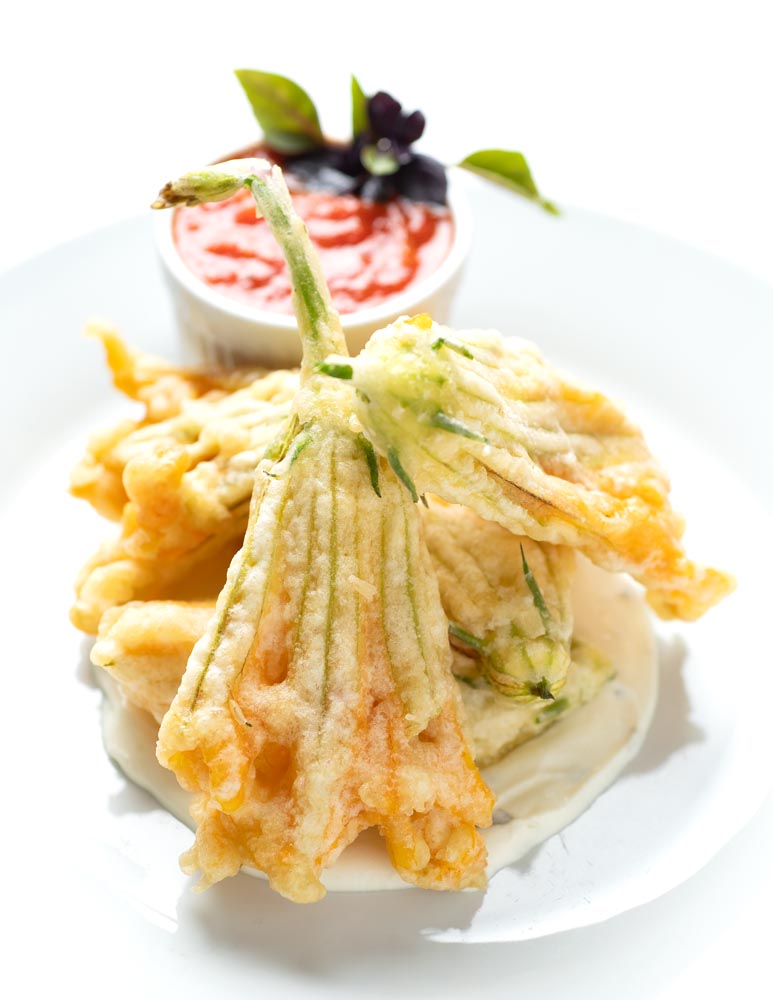
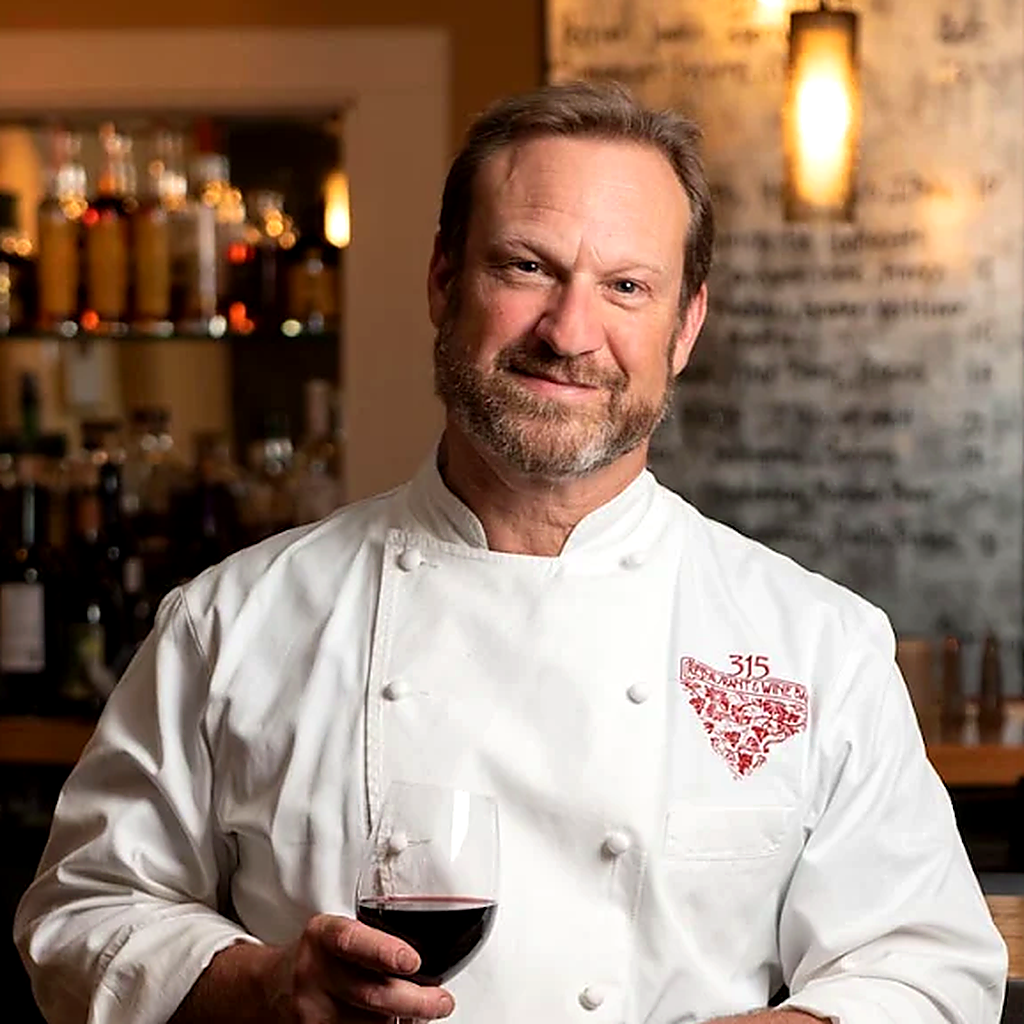
At 315, that makes September the closing month for one of Louis Moskow’s most popular seasonal plates: Squash Blossom Beignets with Goat Cheese Fondue and Tomato Basil Sauce.
The blossoms are delicate. The cooking around them is deliberately restrained. Crisp batter gives way to the subtle flavor of squash, with creamy goat cheese underneath and the acidity of slow-roasted tomato bringing the plate back into balance.
It is local New Mexico produce handled through a French kitchen, with a Sancerre from the Loire alongside it.
A Blossom Harvested While It Is Open
A squash blossom is the flower of the zucchini plant, and Louis uses only the male flowers, which grow on stems rather than developing into zucchini.
The blossoms for 315 come from one farmer, Rossa Maria Alcantar, whose farm is in Velarde, New Mexico, on the Rio Grande south of Taos. The flowers are hand harvested at night while they are still open.
That short harvest is one reason the dish belongs to this particular part of the year. Zucchini is available through the summer, and the kitchen uses it in different ways throughout the season. The flower has its own window.
The beignets have been part of the restaurant’s late-summer cooking for more than thirty years. The dish developed as a way to give the blossom enough supporting flavor without overwhelming an ingredient that is naturally subtle.
Crisp Blossom, Goat Cheese and Slow-Roasted Tomato
Louis calls the dish a French classic that the kitchen has modified over the years.
The blossoms are dipped in a batter leavened with soda water and egg, then flash fried until golden. They sit over a goat cheese fondue flavored with garlic, shallots, fine herbs and a touch of toasted cumin. At 315, garlic is poached in oil rather than used raw, softening its bite.
The final element is a tomato basil sauce that is slow roasted for hours.
Those components have distinct jobs on the plate. The blossom contributes crisp texture and a subtle squash flavor. The goat cheese gives it a creamy foundation. The acidity of the tomato cuts through the cheese, while basil adds an herbal note.
The result is less about any one assertive flavor than the relationship among them. That is central to Louis’s cooking. The ingredients complement rather than overwhelm one another, leaving room for the wine.
Why Louis Pours Sancerre
With the squash blossom beignets, Louis reaches for Sauvignon Blanc, specifically Sancerre from the Loire Valley.
His September bottle is Vacheron Sancerre 2024. Louis describes it as bright and lean, with compelling acidity, length, minerality and cut.
That structure makes sense beside this plate. The wine’s citrus and bright green
herbal character follow the basil and delicate squash flavors, while its acidity works with the creamy goat cheese and tomato. Louis also finds a hint of green pepper from pyrazines, naturally occurring aromatic compounds in Sauvignon Blanc.
It is a pairing built around clarity rather than weight. Neither the plate nor the wine has to compete.
The blossoms finish with the September harvest. The Vacheron Sancerre remains the bottle Louis would pour with them at the table, and we’ll look more closely at that wine in this month’s companion wine post.
315 is on Old Santa Fe Trail, dinner nightly, reservations at 315santafe.com.


